
Before Verona: what Milan Design Week 2026 taught us about stone
In April, stone kept turning up at Milan Design Week in forms we did not expect: a rock holding up a kitchen counter, upholstered pebbles, paper that looks like marble. As Marmomac opens its 60th edition in Verona, we go back through our Milan coverage and set out what we will be looking for at the fair.
Stone was not on our list when CIYCEA’s team covered Salone del Mobile.Milano and the Fuorisalone venues this spring. Our 38-page report, compiled by Ece Ege, followed furniture, colour and the way design week now fills the whole city. Reading it again ahead of Marmomac, we noticed how often one material came back, sometimes as itself and more often as an idea.
Stone that carries weight
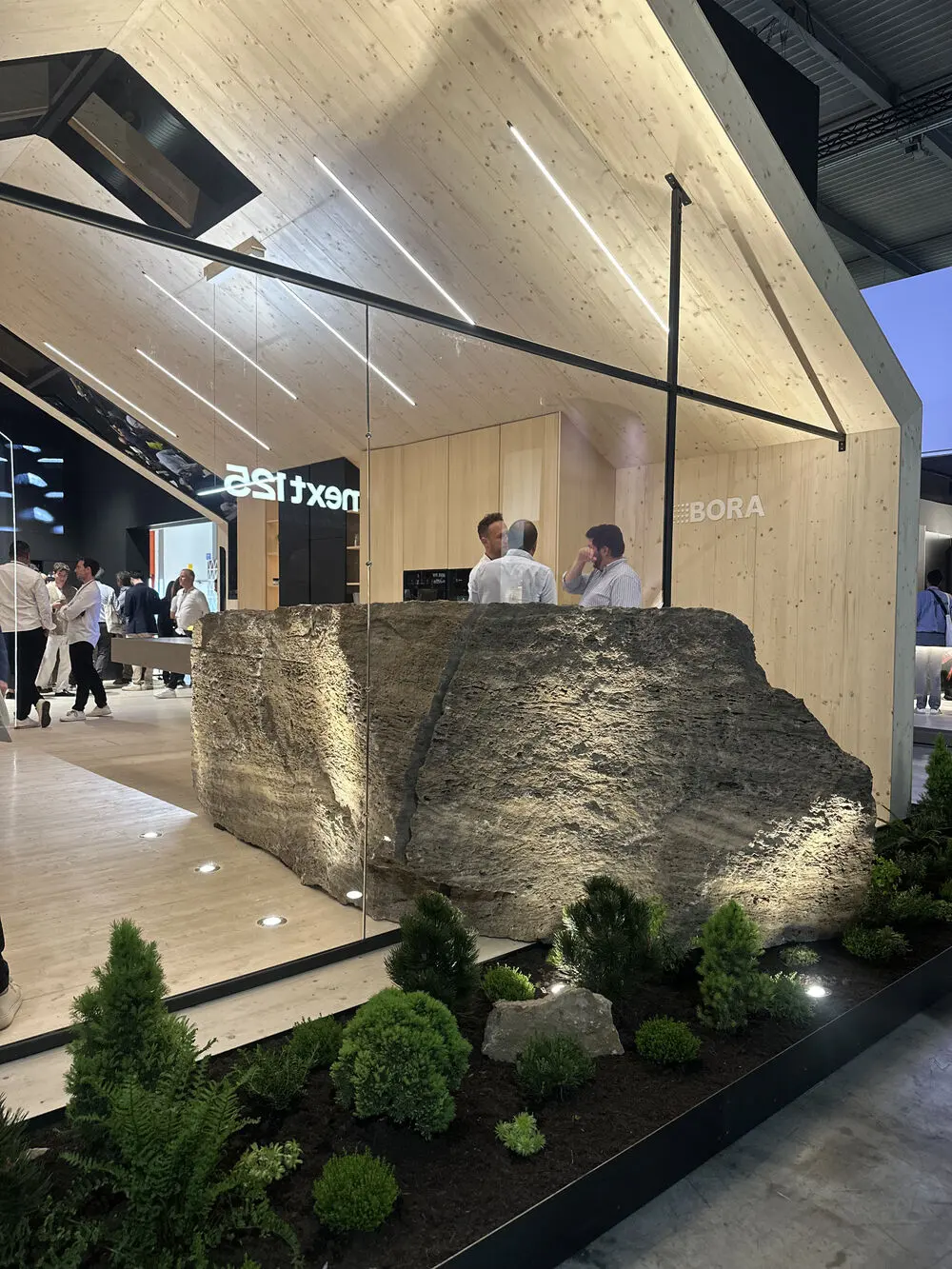
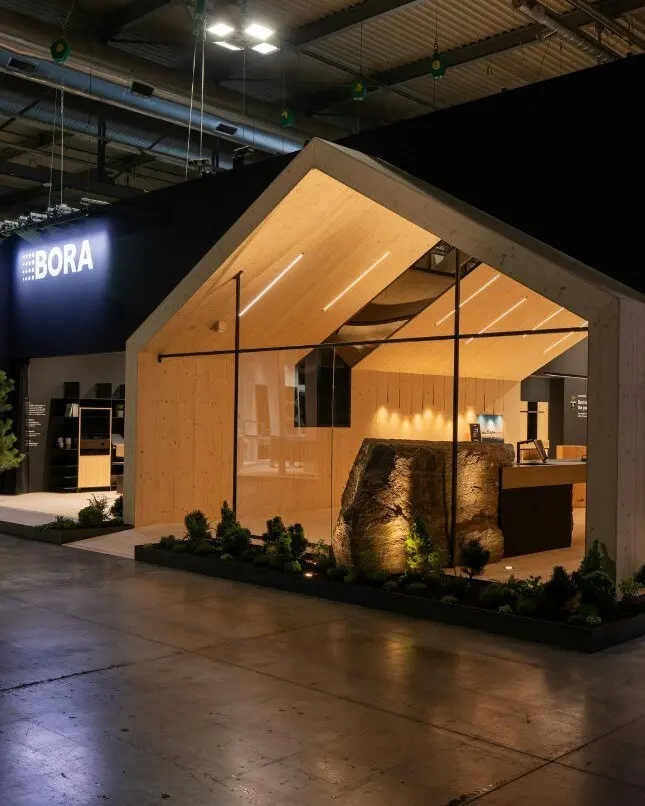
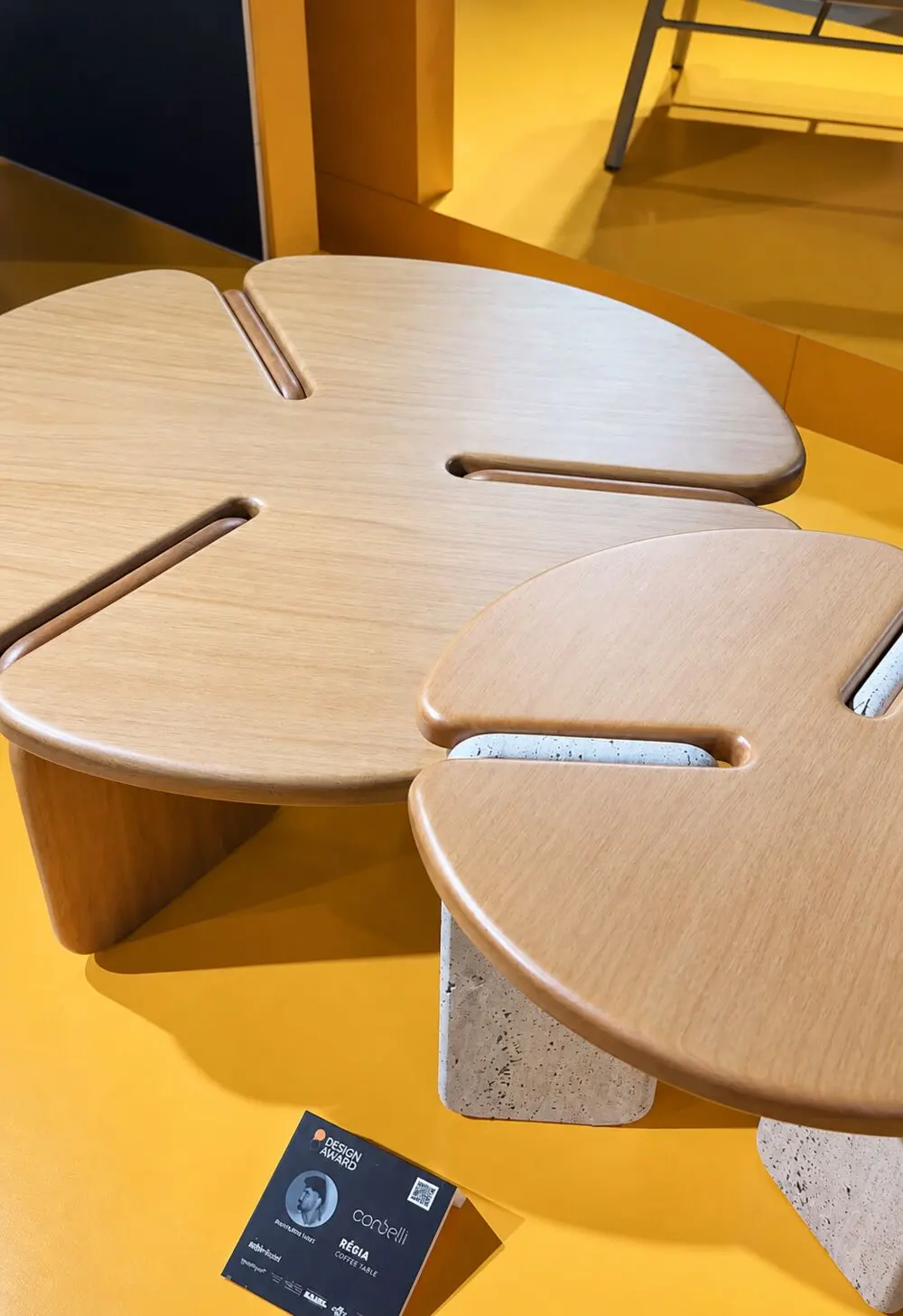
Among the pieces shown with Brazilian Furniture at Salone, Guilherme Ashy’s Corbelli Régia coffee table combines a lobed wooden top with a block of pale stone. On Bora’s stand, the kitchen sat inside a gabled timber house, and the counter ran straight into a rough, uncut-looking rock, lit from below and ringed with low planting. In neither case was stone a luxury veneer. It did structural and visual work, and it was allowed to look like what it is: heavy, old and slightly unruly.
Stone as a shape
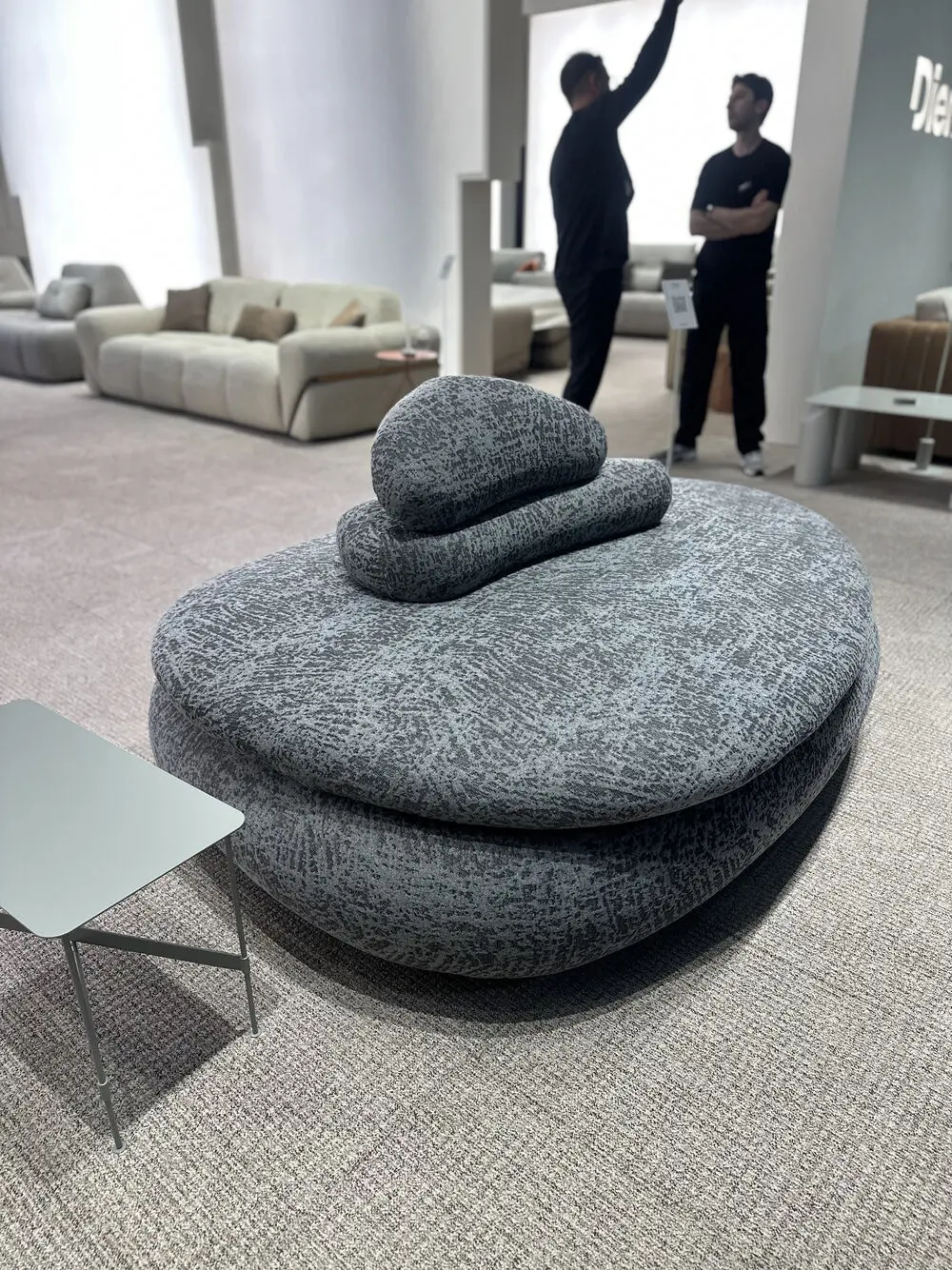
Elsewhere, stone was an image rather than a material. Dienne showed seating built from stacked, upholstered forms that read at once as river pebbles. At Appartamento Spagnolo, the Elle Decor Italia and Interiors From Spain installation curated by Studiopepe at Palazzo Castiglioni, dark round vessels were grouped on a low grey bench among the planting. Our report described the landscape design there as “turning nature from a backdrop into an active presence”.
Materials that behave like geology
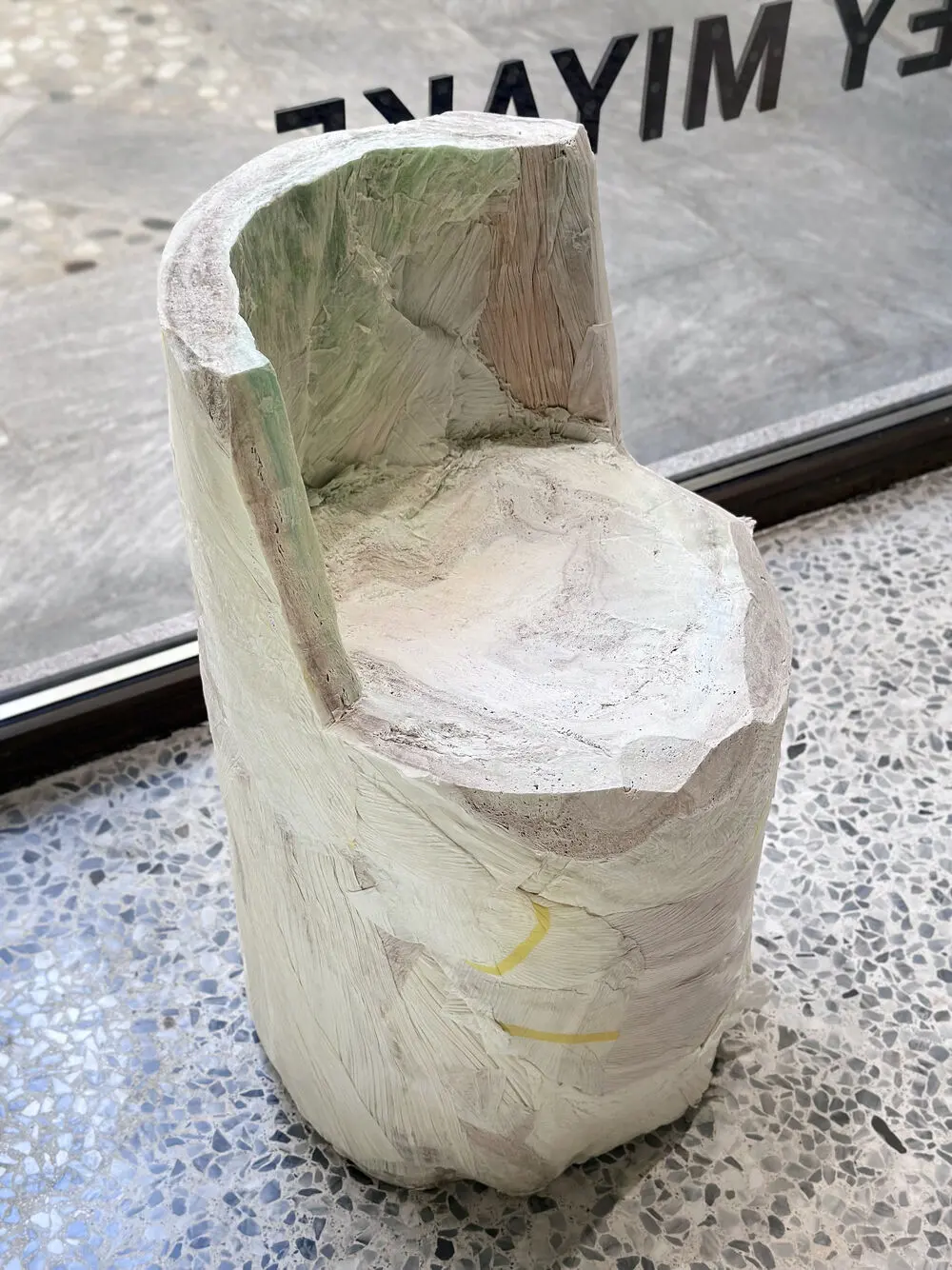
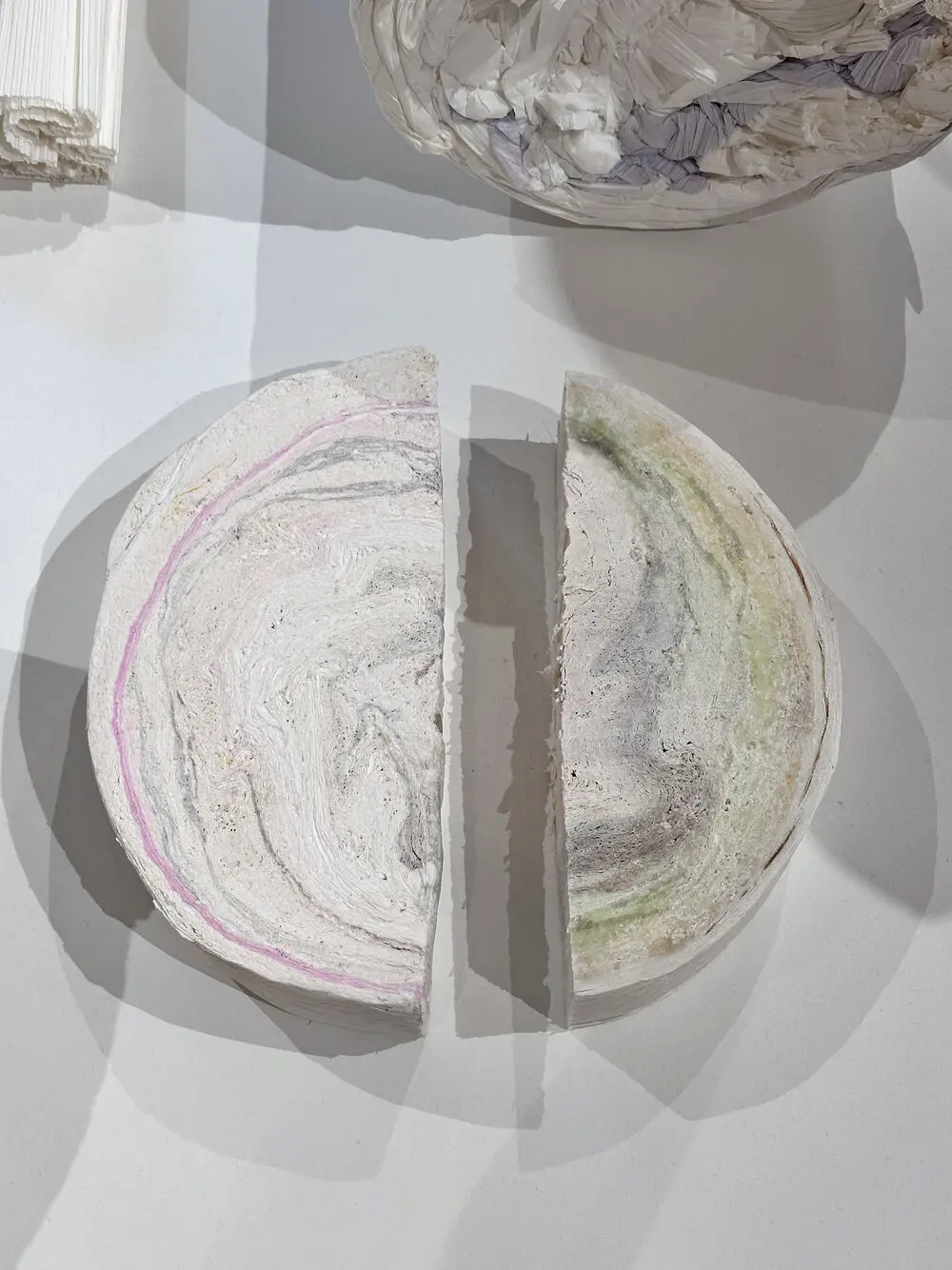
The most stone-like objects of the week were not stone at all. At its Via Bagutta space, ISSEY MIYAKE presented The Paper Log: Shell and Core, a project conceived by Satoshi Kondo of MIYAKE DESIGN STUDIO and developed with the Spanish architecture office Ensamble Studio. It takes the compressed paper rolls left over from the house’s pleating process, 80-centimetre cylinders that would otherwise be discarded or recycled, and turns them into furniture and sculptural objects. Once cut, the rolls reveal bands and veins that look very much like sedimentary rock.
At Sensory Landscape, Piero Lissoni’s installation for Elle Decor Italia in the same palazzo, a space designed by the architect Giulia Foscari used a metallic finish that is meant to oxidise, so that its surfaces keep changing over time.
These projects share an attitude that natural stone has always had. They accept weight, time and the traces of making, and they treat by-products and ageing as part of the design rather than as flaws to hide.
A longer view from Asia
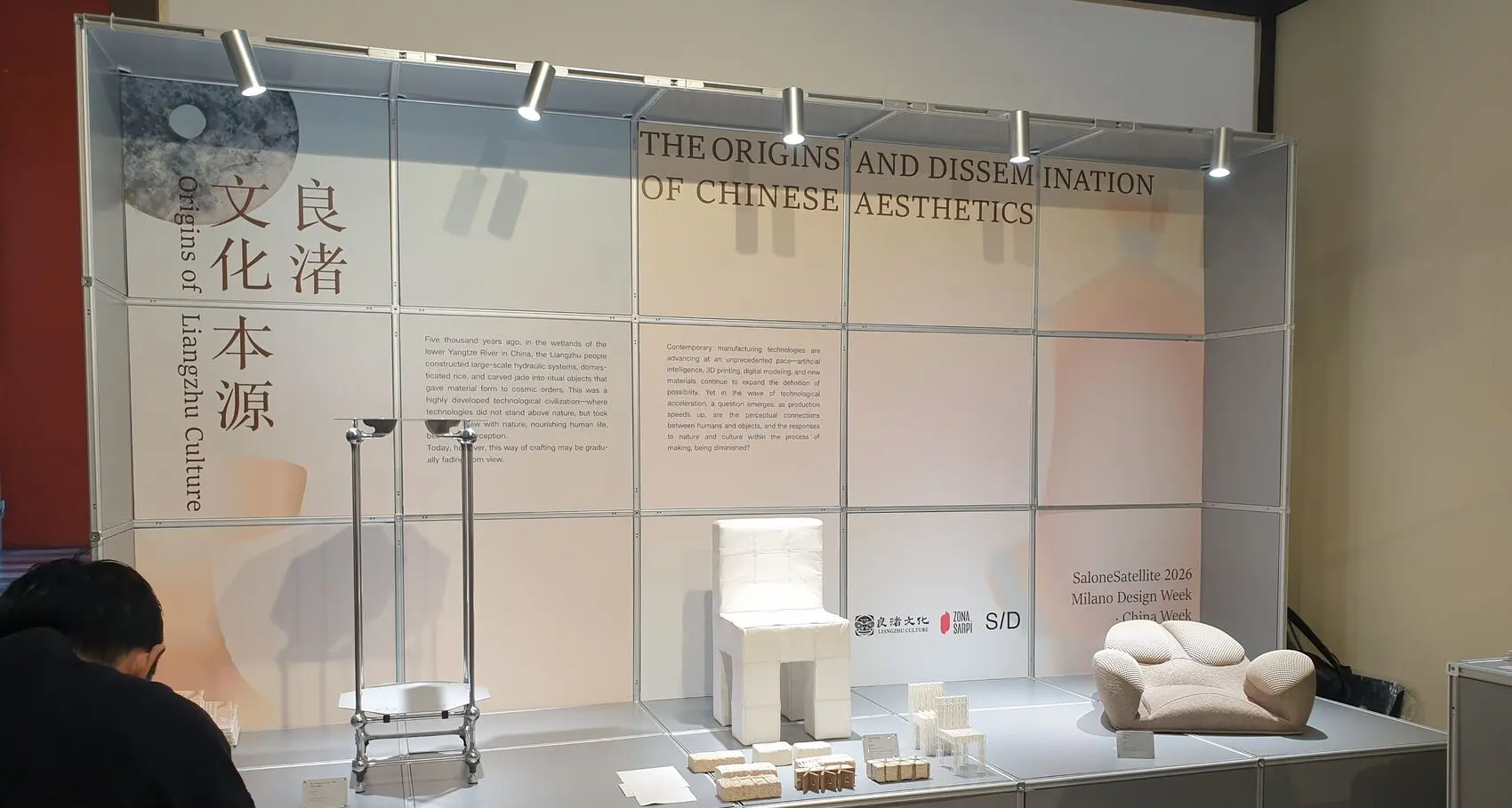
At SaloneSatellite 2026, a China Week display titled The Origins and Dissemination of Chinese Aesthetics looked back five thousand years to the Liangzhu culture of the lower Yangtze River, whose craftspeople carved jade into ritual objects. Its wall text then turned to the present, asking whether the acceleration brought by AI, 3D printing and digital modelling is weakening the perceptual bond between people, objects and the act of making. For an association working between Asia and Europe, it was a useful reminder that the stone question is neither only European nor only about marble.
What we will look for in Verona
Marmomac 2026 runs at Veronafiere from 22 to 25 September. For its 60th edition, the fair has given its cultural exhibitions a new format under the title THE BEDROCK: Leading the Future of Natural Stone. Joseph Grima’s ON STONE looks at how technology is recasting stone as a long-lasting, reusable and low-emission material. Davide Fabio Colaci’s MARBLE INTERIORS – 10 Edited Projects gathers ten interiors in which marble and natural stone take the lead. Giuseppe Fallacara revisits vaulted stone space in ONCE UPON A TIME, THE “SKY” OF ARCHITECTURE, and Raffaello Galiotto’s MATERIAL CHARISMA considers whether a culture of stone could return to architecture. At the centre, Giorgio Canale’s PANTHEON sets out 15 columns clad in 60 stone materials from around the world.
From Milan, we take four questions to Verona.
- Structure or surface? In Milan, stone carried real loads. We want to see how the projects in MARBLE INTERIORS use it, as structure, as cladding or both, and what each choice means for weight, transport and emissions.
- Where do the offcuts go? ISSEY MIYAKE built a design language out of a production by-product. We will ask stone processors and machinery makers what happens to offcuts, sludge and dust, and whether reuse is becoming a material in its own right.
- How do hands stay in the loop? The Liangzhu display asked whether faster production weakens our relationship with making. Marmomac is where quarried material meets advanced machinery, and we want to understand how the industry keeps craft judgement alive alongside automation.
- Who is stone for next? CIYCEA works with young designers and students in Europe and Asia. We will follow the fair’s education formats, including Marmomac Academy, and report back for readers who may never have visited a quarry.
Our reports from Verona will appear on ciycea.com and on CIYCEA’s LinkedIn page during and after the fair.
Zekun Ling is the founder and Managing Director of CIYCEA.
Photos: CIYCEA, from our report Milan Design Week — Salone del Mobile 2026 (report by Ece Ege). Programme details: Marmomac 2026 cultural exhibitions, marmomac.com.